

In today’s world, business is moving faster than ever. Companies must innovate, adapt, and deliver results quickly to stay competitive. But what does a fast-paced work environment truly look like?
What Does a Day in a Fast-Paced Workplace Look Like?
Imagine working in an environment where priorities shift daily (or even hourly), deadlines are tight, decisions must be made instantly, and new challenges arise before the previous ones are solved.
Employees juggle multiple responsibilities, respond to urgent demands, and often work beyond traditional hours. This level of intensity can be exciting and rewarding but also overwhelming without proper leadership and team support.
Key Challenges in High-Speed Work Environments
- Burnout & Stress: Constant urgency and heavy workloads lead to exhaustion, disengagement, and high turnover.
- Poor Communication: Rapid decision-making often leads to misalignment between teams, creating confusion and inefficiencies.
- Lack of Work-Life Balance: The expectation to be “always on” makes it hard for employees to recharge, affecting overall well-being.
- Decreased Team Morale: Employees may feel undervalued or frustrated if they’re only focused on tasks without acknowledgment or growth.
- Difficulty in Maintaining Quality: Speed often comes at the cost of precision, leading to errors or subpar execution.
- Resistance to Change: Fast-moving workplaces require continuous adaptation, which can be overwhelming for employees resistant to change.
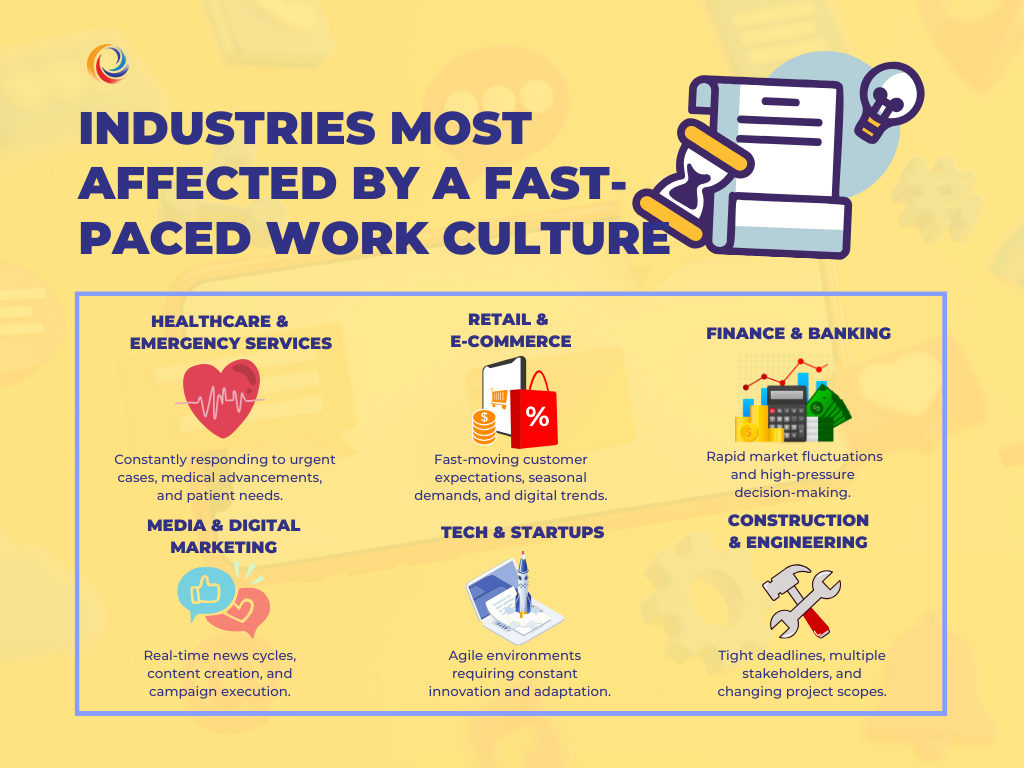
Fast-paced work environments are exhilarating but often involve high stress, tight deadlines, and increased demands. Maintaining team morale has never been more critical.
High morale not only ensures productivity but also fosters loyalty, innovation, and overall job satisfaction.
Here’s How Leaders Can Rise to the Challenge
1. Prioritize Transparent Communication
In a fast-moving work culture, employees crave clarity. Transparency helps eliminate unnecessary stress by ensuring everyone knows the goals, priorities, and their roles in achieving them. Here’s how you can improve communication in 2026.
- Frequent Updates: Use tools like Slack, Microsoft Teams, or WhatsApp to keep the team informed.
- Honest Feedback: Provide constructive feedback that focuses on solutions rather than problems.
2. Celebrate Small Wins
In high-pressure environments, it’s easy to lose sight of accomplishments amidst the demands. Celebrating milestones—big or small—reinforces a sense of progress and motivates the team to push forward.
- Acknowledge contributions in meetings.
- Use reward systems, like shout-outs on internal platforms or small incentives.
- Regularly highlight individual and team successes on social media or newsletters.

3. Empower Your Team
Employees thrive when given autonomy and trust. Empowerment doesn’t mean you step back entirely, but rather guide them while giving them space to innovate.
- Delegating responsibilities that match team members’ strengths.
- Encourage decision-making within set boundaries.
- Provide training or upskilling opportunities to build confidence.
4. Invest in Team Well-Being
As work-life integration becomes the norm, investing in employee well-being has a direct impact on morale. Look beyond traditional perks and focus on holistic support.
- Mental Health: Introduce mental health days or partner with wellness apps.
- Flexibility: Allow flexible schedules or hybrid work models.
- Team-Building: Organize casual team gatherings or virtual coffee chats.

5. Align Purpose and Passion
Morale flourishes when team members see how their work contributes to larger goals. In 2025, employees seek alignment between their roles and the organization’s vision.
- Regularly communicate the “why” behind projects.
- Involve your team in goal-setting and strategic planning.
- Provide opportunities for personal growth aligned with organizational objectives.
Pro Tip for Leaders
Be visible. Whether through town halls, casual check-ins, or personal interactions, your presence makes a difference. Leadership is about being relatable and accessible—qualities that inspire trust and boost morale. Maintaining team morale in fast-paced environments is no easy feat, but it’s vital for organizational success.
Remember: leadership isn’t just about meeting targets; it’s about creating a culture where your team feels valued, motivated, and equipped to excel.
Keep Your Team Motivated, Even in High-Pressure Environments
Fast-paced work environments can challenge even the best leaders. The key to maintaining morale? Strong leadership, clear communication, and a culture of support. Our leadership programs provide you with the strategies to keep your team engaged and resilient.
Learn how to lead with confidence and boost team morale. Explore our leadership programs here.